Potential of Managed Aquifer Recharge Site in California US.
Evaluation of Potential Recharge Site, Central Valley, California
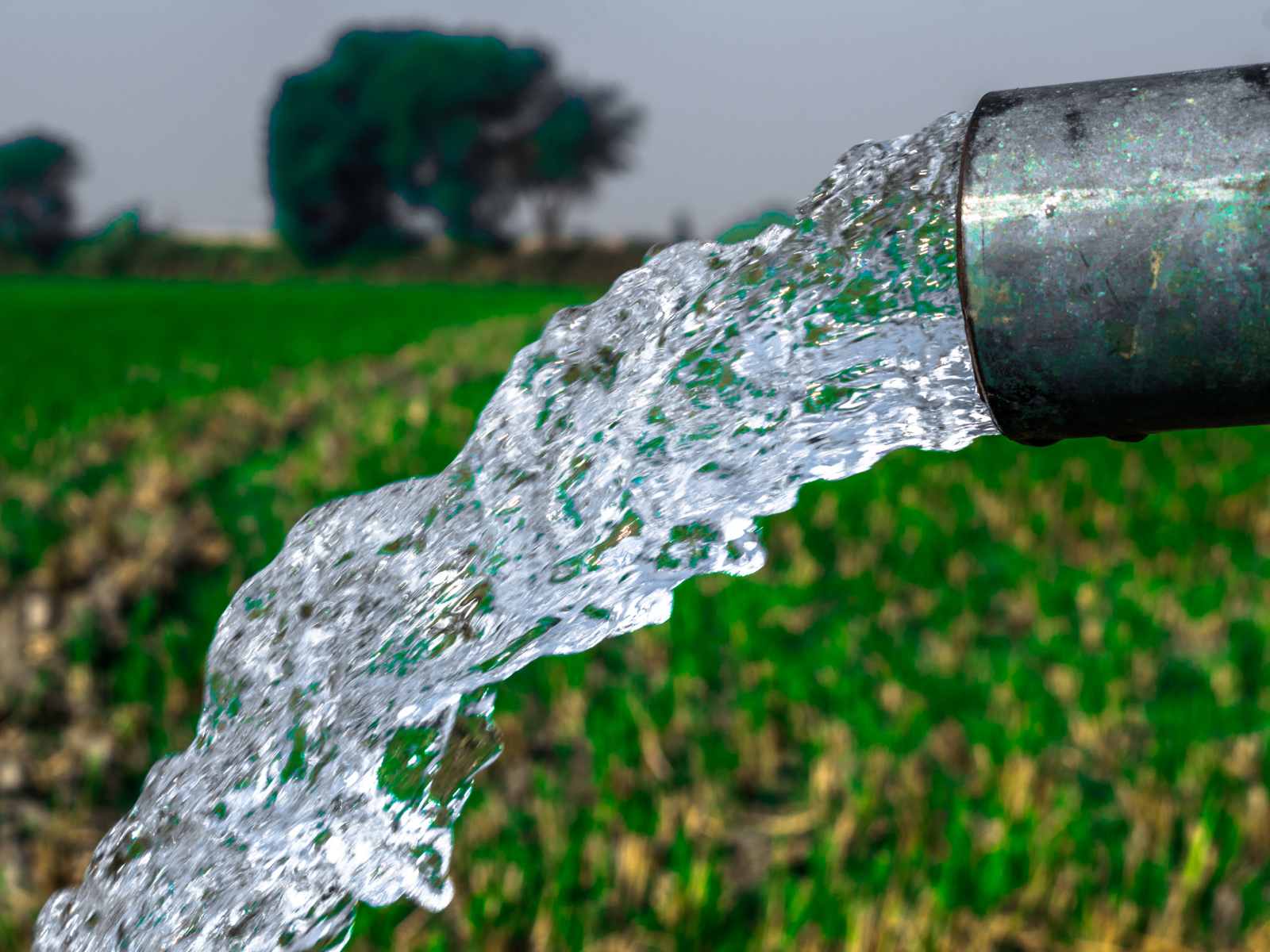
Using tTEM to assess feasibility: Managed aquifer recharge, where excess water is used to recharge the groundwater aquifers, has been proposed as a means of curbing groundwater depletion in the Central Valley. However, locating new fields for recharge is difficult. The challenge is to map out the subsurface to understand where water might move, allowing water agencies to better prioritize and plan for recharge. Study by Stanford University and Aarhus University
Project Background
Central valley supplies 40% of the of United States of Americas agricultural products. The arid Mediterranean climate of the central valley is ideal for year-round production; however, it requires vast amounts of groundwater extraction. The result of which is a continues lowering of the groundwater table across the central valley, with negative effects on groundwater availability and quality. Managing and reversing declining groundwater levels requires several measures, one is managed aquifer recharge.
Results
The case study was carried out by the company Geophysical Imaging Partners (GIP). The purpose was to find the best location for an infiltration basin on a given area of farmland. GIP mapped the entire field using TEMcompany’s tTEM instrument. The tTEM data was turned into resistivity models of the subsurface and using a simple color scale from dark blue/green (low resistivity) to red/purple (high resistivities) different subsurface materials could be identified.
Looking at the resistivity models of the subsurface a possible sand rich area can be easily identified, furthermore what appears to be sand channels can be seen across the field as elongated structures in red color (see case file for models).
It was also noticeable on arial photos of the field, that in the same area where tTEM data showed high resistivity, crops where less dense and green.
Benefits of the survey
Using the information, from the tTEM resistivity models the placement of the MAR infiltration basin was decided. The basin was placed in the part of the field where tTEM models showed the highest resistivities.
When the MAR infiltration basin was established, it achieved an infiltration rate of 2.300 AF in 125 days, which calculates to around 25 AF/day, about 30837 m3 pr. Day, achieving the goal of the project.
Results
The case study was carried out by the company Geophysical Imaging Partners (GIP). The purpose was to find the best location for an infiltration basin on a given area of farmland. GIP mapped the entire field using TEMcompany’s tTEM instrument. The tTEM data was turned into resistivity models of the subsurface and using a simple color scale from dark blue/green (low resistivity) to red/purple (high resistivities) different subsurface materials could be identified.
Looking at the resistivity models of the subsurface a possible sand rich area can be easily identified, furthermore what appears to be sand channels can be seen across the field as elongated structures in red color (see case file for models).
It was also noticeable on arial photos of the field, that in the same area where tTEM data showed high resistivity, crops where less dense and green.
Benefits of the survey
Using the information, from the tTEM resistivity models the placement of the MAR infiltration basin was decided. The basin was placed in the part of the field where tTEM models showed the highest resistivities.
When the MAR infiltration basin was established, it achieved an infiltration rate of 2.300 AF in 125 days, which calculates to around 25 AF/day, about 30837 m3 pr. Day, achieving the goal of the project.
Looking at the resistivity models of the subsurface a possible sand rich area can be easily identified, furthermore what appears to be sand channels can be seen across the field as elongated structures in red color (see case file for models).
It was also noticeable on arial photos of the field, that in the same area where tTEM data showed high resistivity, crops where less dense and green.
Benefits of the survey
Using the information, from the tTEM resistivity models the placement of the MAR infiltration basin was decided. The basin was placed in the part of the field where tTEM models showed the highest resistivities.
When the MAR infiltration basin was established, it achieved an infiltration rate of 2.300 AF in 125 days, which calculates to around 25 AF/day, about 30837 m3 pr. Day, achieving the goal of the project.
When the MAR infiltration basin was established, it achieved an infiltration rate of 2.300 AF in 125 days, which calculates to around 25 AF/day, about 30837 m3 pr. Day, achieving the goal of the project.