Saltwater Intrusion
Understanding saltwater intrusion
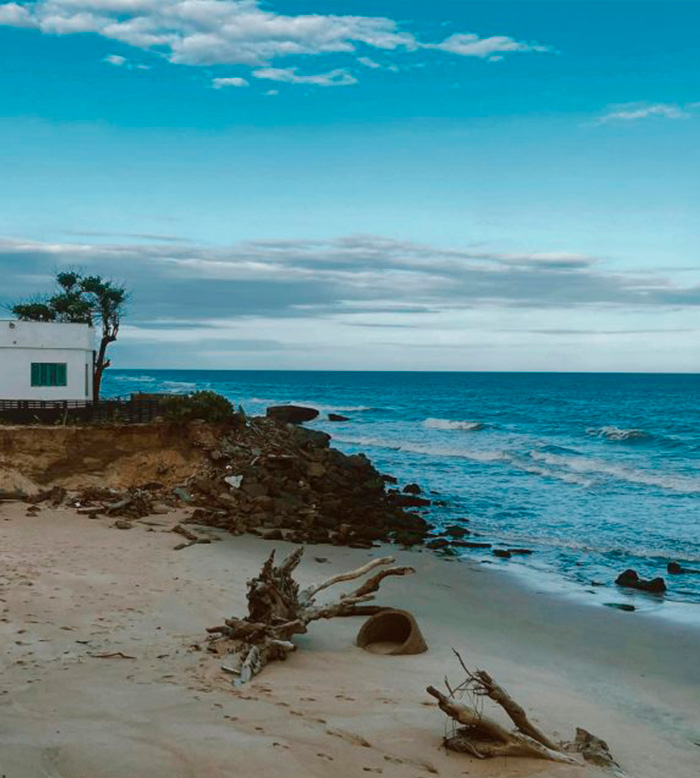
- Over-extraction of groundwater: Excessive pumping reduces pressure in freshwater aquifers, allowing saltwater to move in.
- Rising sea levels: Climate change raises sea levels, pushing saltwater further inland.
- Natural changes: Tidal or seasonal shifts disrupt the balance between freshwater and saltwater.
- Identify the interface between freshwater and saltwater.
- Monitor the extent of saltwater intrusion over time.
- Support groundwater management strategies to mitigate its effects.
TEM's role in supporting saltwater intrusion
Shallow Mapping
tTEM is perfect for mapping areas where saltwater is creeping into freshwater aquifers. By detecting resistivity differences, it can pinpoint where saltwater and freshwater meet, helping us understand the extent of saltwater intrusion.
Rapid Large-Area Coverage
The towed design of tTEM lets us quickly survey large coastal areas, including beaches and aquifers near the coast. This makes it ideal for mapping extensive areas at risk of saltwater intrusion.
Groundwater Surface Interaction
tTEM can help assess where groundwater and surface water, like rivers or estuaries, are vulnerable to saltwater contamination. This helps identify the areas most at risk and their impact on local freshwater sources.
Tracking Changes Over Time
With repeated surveys, tTEM can help us monitor how saltwater intrusion progresses, which is key for understanding the effects of climate change, sea-level rise, and human activities like excessive groundwater pumping.
Deep Insights
sTEM excels at providing deep penetration into the ground, helping us map saltwater intrusion deeper into freshwater aquifers—something that’s challenging with other methods.
High Resolution Data
sTEM can deliver detailed measurements at specific locations like wells, riverbanks, or coastal areas. It provides accurate resistivity data that helps differentiate between freshwater, brackish, and saltwater zones at various depths.
Mapping Subsurface Layers
sTEM helps us visualize the boundary between saltwater and freshwater in deeper parts of aquifers, which is crucial for understanding how saltwater moves underground. This is essential for creating strategies to prevent further intrusion.