Raw Materials
Understanding raw materials
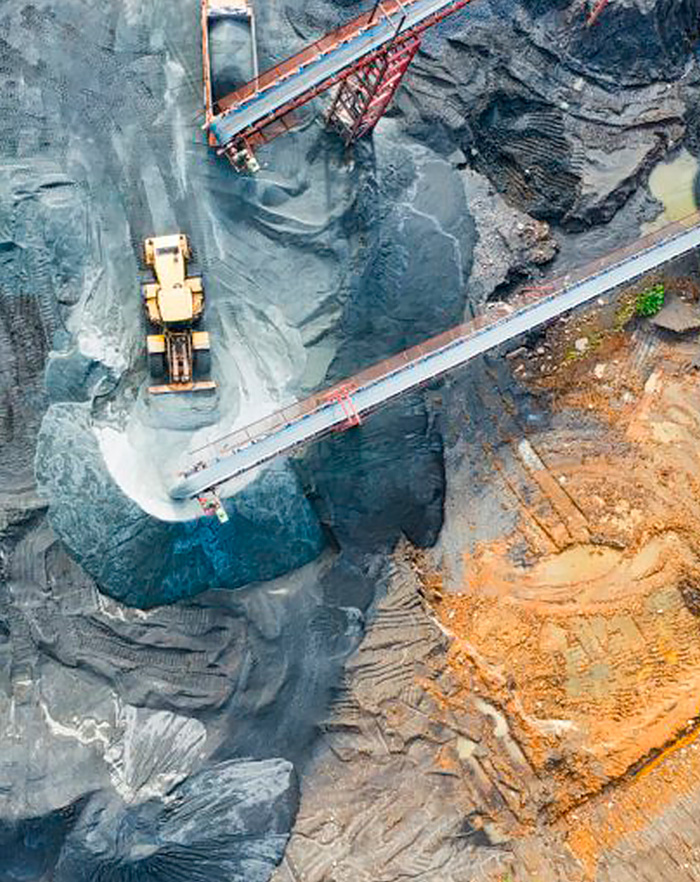
- Minerals: Precious and base metals such as gold, copper, iron, and lithium, critical for industries like electronics, manufacturing, and energy storage.
- Energy resources: Coal, uranium, and geothermal reservoirs that fuel energy production and support global power needs.
- ndustrial materials: Sand, gravel, and limestone used in construction, infrastructure, and manufacturing processes.
- Mapping resource-rich zones with high precision to minimize exploratory drilling.
- Identifying geological features that indicate mineral deposits or energy reserves.
- Ensuring sustainable extraction practices by reducing environmental impact and waste.
Raw materials exploration
Explore how TEMcompany’s instruments can help deliver precision and efficiency when scanning for raw material deposits.
Shallow Resource Mapping
tTEM is excellent for quickly and efficiently mapping the shallow subsurface, which is crucial when exploring near-surface raw materials like sand, gravel, or shallow ore deposits. It can help identify areas with conductive anomalies, which may indicate the presence of certain raw materials such as clays, salts, or shallow mineral deposits.
Large Coverage Area
One of the key strengths of tTEM is its ability to cover large areas rapidly. When exploring potential raw material deposits over expansive areas, tTEM can provide initial insights into the distribution and extent of materials, helping to narrow down areas for more detailed exploration or drilling. This is particularly useful for assessing aggregate deposits or shallow mineral reserves.
Identification of Conductive Materials
tTEM works by detecting variations in electrical conductivity in the ground, which can help to identify mineral deposits that are conductive, such as base metals or minerals with metallic content. This helps target areas where further exploration might be needed to evaluate the economic viability of raw material extraction.
Cost Effective for Initial Surveys
tTEM is a cost-effective tool for preliminary exploration as it provides valuable data on subsurface conditions and helps prioritize locations for more detailed exploration or drilling. It’s a great first step in raw materials exploration, allowing companies to quickly assess the potential of a large area without the cost and time associated with drilling.
High Resolution Detection
sTEM and tTEM offer detailed, high-resolution data. They are ideal for localized exploration and fine-scale mapping of raw material deposits. For instance, sTEM can map areas with specific mineral deposits, allowing geologists to identify zones where raw materials such as copper, gold, or other valuable minerals are concentrated.
Deeper Exploration
While tTEM is great for shallow mapping, sTEM can be used for deeper investigations to explore deep ore deposits or mineral-rich zones at greater depths. This is particularly useful when raw materials are located in deeper geological formations, such as deep copper deposits or metallic ores.
Enhanced Sensitivity for Mineral Exploration
sTEM provides a high level of sensitivity and precision in detecting resistivity contrasts in the subsurface. This makes it ideal for exploring and mapping low-resistivity materials, such as certain mineral veins or conductive ore bodies, which might not be detectable with lower-resolution methods.
Targeted Exploration for Specific Raw Materials
sTEM is suited for identifying mineralization patterns and depth variations within a localized area, enabling exploration teams to focus their efforts on the most promising zones.