Mapping Clay Thickness in the Netherlands
Dike Safety Investigations
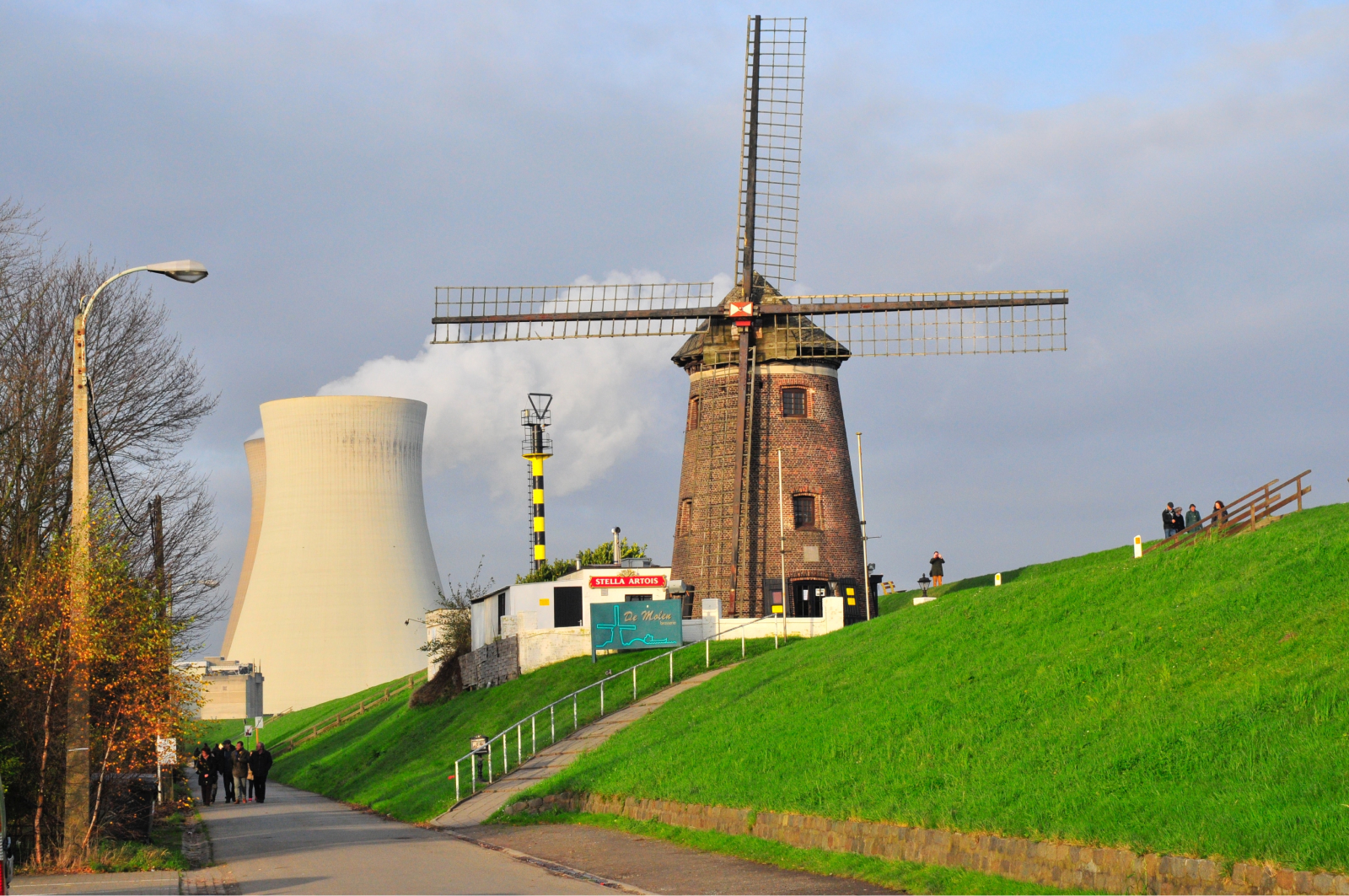
The Geological Survey of the Netherlands together with WSP, and the Aa en Maas Water conducted a tTEM survey near the Maas River. The survey was carried out in order to test the usability of the tTEM geoscanner in earth dike safety assessment. The presence, thickness and lateral extent of a thick clay layer was used to assess the safety in a spatial concern.
Project Background
As a result of the new standards from 2017, the Aa en Maas water board was tasked with reinforcement of more than 100 km of primary flood defenses along the river Maas.
One of the projects that has already started is the dike improvement of the stretch between Cuijk and Ravenstein, approximately 21 km of the barrier, of which most of the barrier consists of an earth dike. In the exploratory phase it quickly became clear that additional soil research was required to optimize the reinforcement task and the new dike design.
An investigative tTEM survey was conducted in December 2021, carried out by The Geological Survey of the Netherlands – TNO, WSP and the Aa en Maas Waterboard, to assess the tTEMs usability in this case.
Results
For this investigation, tTEM data was collected along three sections of the Maas river, on top of and in the immediate vicinity of the dike, but due to interference from infrastructure and cables, the data collected directly on top of the dike was too disturbed to be used.
The results showed a continuous 4 meter thick clay layer present almost everywhere in the survey area. The conclusion is that the tTEM provides information that until now could not be obtained on the basis of drilling and probes (point observations) due to the continuous nature of the results.
In situations where the lateral continuity of clay layers in particular is important, the tTEM technique can be used for three-dimensional mapping. The speed of recording and the non-destructive character are important advantages of the technique. Partly on the basis of these tTEM measurements, a significant sub-area of the dike stretch between Cuijk and Ravenstein has a demonstrably thick clay layer in the foreland that no task remains for failure mechanism piping.
One of the projects that has already started is the dike improvement of the stretch between Cuijk and Ravenstein, approximately 21 km of the barrier, of which most of the barrier consists of an earth dike. In the exploratory phase it quickly became clear that additional soil research was required to optimize the reinforcement task and the new dike design.
An investigative tTEM survey was conducted in December 2021, carried out by The Geological Survey of the Netherlands – TNO, WSP and the Aa en Maas Waterboard, to assess the tTEMs usability in this case.
Results
For this investigation, tTEM data was collected along three sections of the Maas river, on top of and in the immediate vicinity of the dike, but due to interference from infrastructure and cables, the data collected directly on top of the dike was too disturbed to be used.
The results showed a continuous 4 meter thick clay layer present almost everywhere in the survey area. The conclusion is that the tTEM provides information that until now could not be obtained on the basis of drilling and probes (point observations) due to the continuous nature of the results.
In situations where the lateral continuity of clay layers in particular is important, the tTEM technique can be used for three-dimensional mapping. The speed of recording and the non-destructive character are important advantages of the technique. Partly on the basis of these tTEM measurements, a significant sub-area of the dike stretch between Cuijk and Ravenstein has a demonstrably thick clay layer in the foreland that no task remains for failure mechanism piping.
The results showed a continuous 4 meter thick clay layer present almost everywhere in the survey area. The conclusion is that the tTEM provides information that until now could not be obtained on the basis of drilling and probes (point observations) due to the continuous nature of the results.
In situations where the lateral continuity of clay layers in particular is important, the tTEM technique can be used for three-dimensional mapping. The speed of recording and the non-destructive character are important advantages of the technique. Partly on the basis of these tTEM measurements, a significant sub-area of the dike stretch between Cuijk and Ravenstein has a demonstrably thick clay layer in the foreland that no task remains for failure mechanism piping.