Contamination Assessment
Understanding contamination assessment
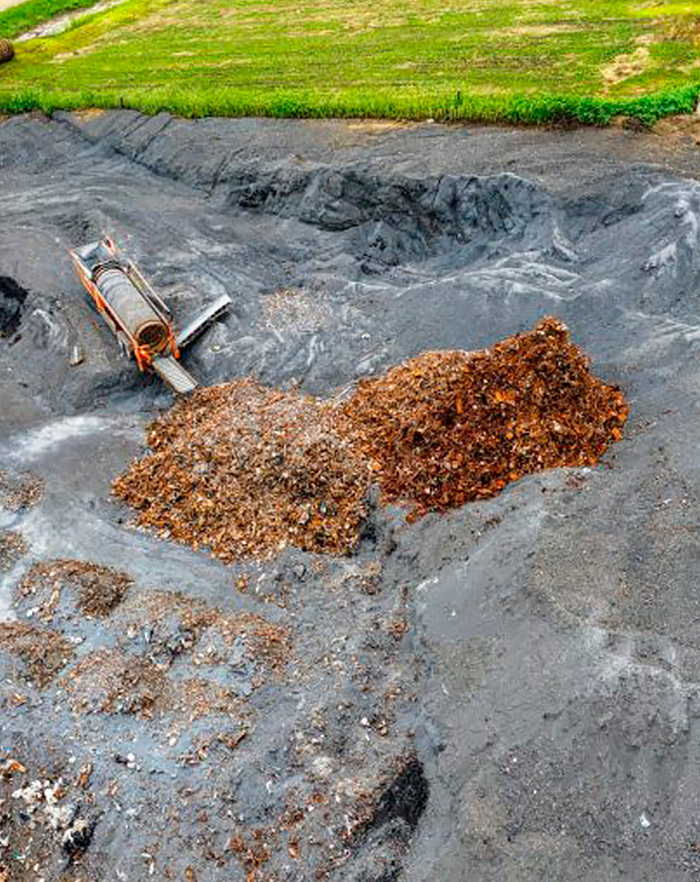
Common sources of contamination include:
- Industrial Waste: Leakage from factories, refineries, and storage facilities can introduce harmful chemicals into the ground, causing long-term environmental risks. tTEM surveys are highly effective for efficiently delineating between sand layers (flow paths) and clay layers (barriers) for the pollutants.
- Agricultural Runoff: Pesticides, fertilizers, and animal waste from farming seep into the ground, contaminating water supplies and ecosystems. tTEM is adept at identifying vulnerable zones in shallow aquifers and pinpointing areas of concern for further investigation.
- Landfills: Leachate from landfills, often containing toxic substances, can seep into surrounding soil and groundwater, threatening nearby communities. sTEM provides detailed profiling, helping to assess the possible depth and spread of the vulnerable sand layers in the subsurface, which is critical for effective remediation planning.
- Accidental Spills: Oil, chemical, or hazardous materials spills due to accidents or improper handling can cause widespread contamination of land and water sources. Both tTEM and sTEM surveys provide valuable insights into the possible spread of contamination, supporting cleanup efforts by accurately mapping the affected areas.
Detecting and mapping
How TEM instruments support effective contamination assessment.
Detection of Contaminant Plumes
The tTEM is highly effective for identifying the spread of contaminant plumes in groundwater. By detecting changes in subsurface resistivity, tTEM can locate pollutants such as chemicals, or heavy metals. Contaminants like chlorinated solvents, which have lower resistivity, can be easily traced with this method, helping delineate the extent of contamination.
Large-Area Surveys
The tTEM can cover large areas quickly, which is particularly useful for mapping contamination in rural environments. It allows for efficient mapping of subsurface layers over broad regions, helping to prioritize areas for more detailed investigation.
Identifying Shallow Contamination
tTEM excels at large-scale shallow-depth surveys, making it well-suited for mapping near-surface vulnerability to contamination near landfills, waste disposal sites, or chemical spills. It also helps identify pathways where contaminants might migrate deeper into aquifers.
Environmental Remediation Planning
The data collected by tTEM is crucial for planning effective remediation efforts. By understanding the extent and migration patterns of contamination, it guides the placement of treatment wells, containment barriers, or other interventions needed to manage or remove contaminants.
Deep Contamination Mapping
While tTEM is ideal for large area surveys, sTEM is more suited for mapping deeper subsurface layers, particularly when pollutants have migrated into deeper aquifers or soil layers. This is critical for identifying underground plumes affecting drinking water sources or ecosystems.
High-Resolution Contamination Data
sTEM offers high-resolution data that can detect subtle variations in resistivity. This makes it ideal for identifying smaller contamination zones which are particularly valuable in high-risk sites.
Localized Surveys for Site-Specific Contamination
sTEM is perfect for focused studies at specific sites where contamination is suspected or confirmed. It provides detailed data on subsurface layers, which helps pinpoint exact boundaries and informs remediation strategies.
Monitoring Subsurface Layers
sTEM can also be used for long-term monitoring, providing precise measurements over time to map subsurface layers where contaminants move through groundwater or soil, especially in cases where the contamination spreads slowly.